


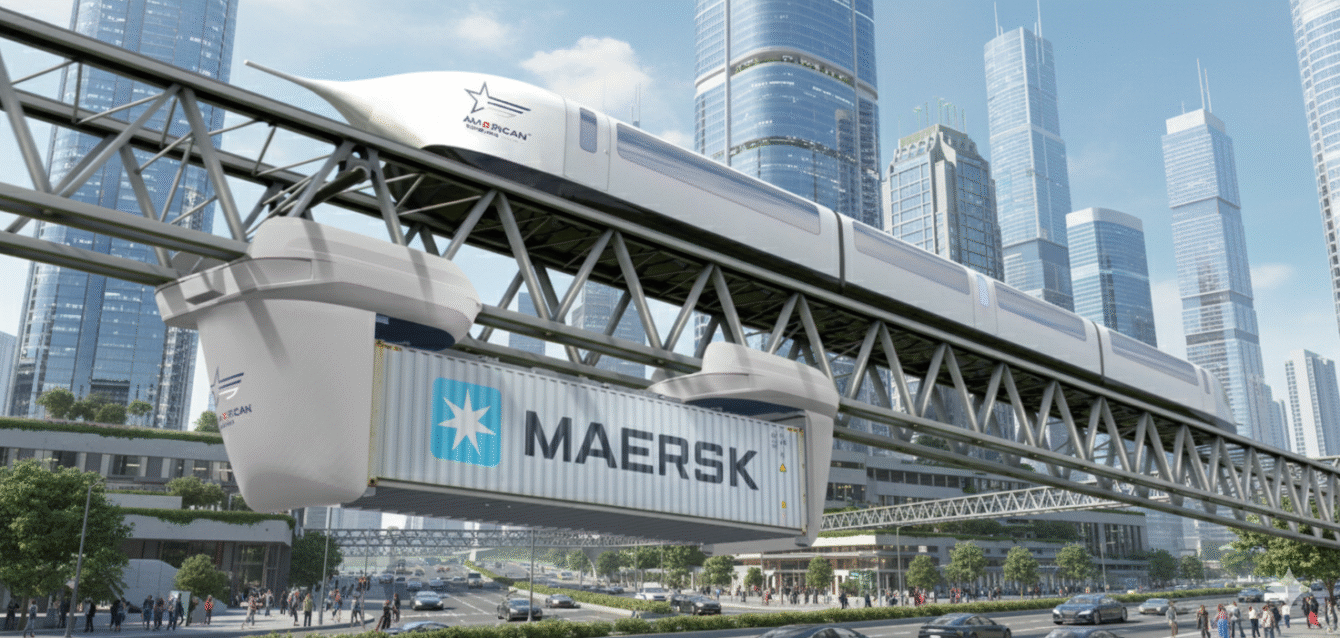
In an era where America’s transportation infrastructure is crumbling under the weight of congestion, environmental strain, and economic inefficiency, a bold vision emerges: the American Dream Rail (ADR) Legacy Project. This isn’t just another high-speed rail proposal, it’s a comprehensive, transformative system that integrates elevated string rail technology with 10 innovative linear Dream cities, all as part of a nine-point legacy plan designed to propel the nation forward. At its core, ADR promises to transport passengers at speeds up to 310 mph and freight at up to 125 mph for loads up to 60,000 lbs, all while minimizing ecosystem damage and slashing costs. But what sets ADR apart is its role as one piece of a larger puzzle aimed at growing the economy, reviving the American Dream, and uniting a divided nation. No other high-speed rail (HSR) initiative comes close, bogged down by ballooning costs, delays, and a narrow focus that ignores America’s broader challenges. As we explore ADR’s unparalleled advantages, it becomes clear: this is the only valid option for HSR in the USA.
The urgency for such a system is undeniable. With the U.S. population projected to grow significantly by 2050, freight demand is expected to surge by 30-40%, exacerbating supply chain bottlenecks and environmental impacts from conventional trucks and outdated rail. ADR addresses these head-on, offering a sustainable, efficient alternative that no competitor matches. Its elevated design not only bypasses ground-level obstacles but also preserves natural landscapes, using minimal materials and concrete for a lighter environmental footprint. This forward-thinking approach positions ADR as a game-changer in transportation, but its true power lies in the holistic nine-point legacy plan, where ADR serves as a catalyst for national renewal.
The ADR System: A Quantum Leap in Transportation
The American Dream Rail isn’t merely about getting from point A to B faster—it’s a dedicated, elevated “AboveGround™” network that redefines mobility. Built on prestressed string rail technology, ADR’s modular tracks span up to 27,000 miles, elevated 60 feet or higher to avoid ground-level hazards like traffic, wildlife collisions, and weather disruptions. This all-electric system operates with 99.8% efficiency, using 2-7 times less energy than conventional roads or rails, and features unmanned USPods for 24/7 service.
Key features include:
- Passenger Capacity and Speed: Up to 50,000 passengers per hour in comfortable, Wi-Fi-equipped pods, with speeds scaling from intracity hops to interstate blasts at 310 mph. Imagine commuting from rural areas to urban centers in under 30 minutes, enjoying breathtaking panoramic views like a low-altitude flight, a calming, priceless experience after a stressful day.
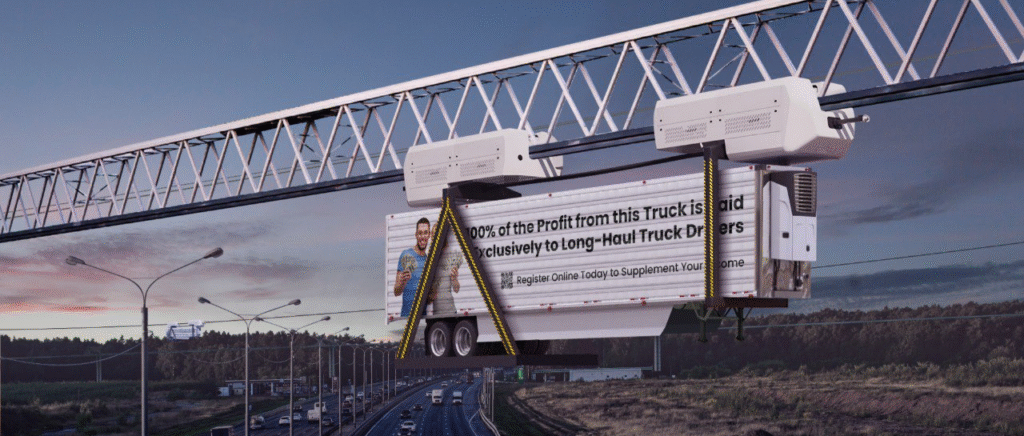
- Freight Innovation: Dual-use tracks handle 60,000 lbs per unit in standard 53-foot containers, tankers, or reefers at 125 mph, halving costs compared to long-haul trucks and reducing emissions by 124 million tons annually by replacing up to 65% of semis.
- Sustainability and Cost Efficiency: Minimal concrete and materials lower build costs to $13-42 million per mile, with resilience to extreme temperatures (-140°F to +140°F) and earthquakes. Freight revenues offset capital expenses, making it self-sustaining amid growing demand tied to population growth.
This system addresses urban sprawl by enabling sustainable rural living, with high-speed links up to 100 miles from cities. But ADR’s true genius lies in the 10 linear Dream cities which are multifunctional hubs that serve as central stations, distribution centers, and vibrant communities. These 1-5 mile linear structures integrate passenger terminals, freight sorting, and subscription-based driverless shuttles for last-mile connectivity, fostering a new sustainable lifestyle while streamlining supply chains. In a Houston pilot, for example, the first Dream city could connect the port to inland areas, demonstrating how these hubs transform regional economies.
Expanding on this, the linear cities are engineered for modularity, allowing rapid expansion and adaptation to local needs. They incorporate commercial spaces, residential areas, and green zones, promoting a “15-minute city” model extended regionally. This integration not only reduces car dependency but also creates thousands of jobs in construction, maintenance, and operations, directly contributing to economic growth.
Seamless Integration with Existing Systems: Complement, Not Compete

Unlike other HSR projects that risk disrupting established networks, ADR is designed to enhance America’s transportation ecosystem without interference. It modernizes the 40-year-old trucking industry by offloading long-haul segments to elevated rails, allowing trucks to focus on efficient last-mile deliveries for full-truckload, less-than-truckload, and parcel freight. This hybrid model eliminates bottlenecks from bad weather, accidents, or construction, improving supply chain resilience and reducing roadway congestion for everyday travelers.
Equally important is ADR’s prudent approach to heavy rail—the backbone of U.S. freight, moving 1.7 billion tons annually via operators like Union Pacific (UP) and CSX. ADR avoids shared tracks that could degrade performance, instead supporting heavy rail through non-interfering automated transfers at hubs. For instance, in a Houston pilot, cranes and AI-guided robots could swiftly move containers between USPods and UP trains at port-adjacent facilities, cutting dwell times by 50% without touching UP’s infrastructure. This tri-modal synergy (ADR, heavy rail, trucks) boosts overall throughput by 20-30%, ensuring critical supply chains flow smoothly while heavy rail handles ultra-bulk loads. No other HSR prioritizes this collaboration, often leading to conflicts or inefficiencies in mixed-use corridors.
This non-interference ethos extends to all operations, ensuring ADR complements rather than competes. By running elevated lines parallel to existing corridors where feasible, it adds capacity without the political and logistical headaches of track-sharing agreements, which have plagued projects like Amtrak’s Northeast Corridor.
Enormous Advantages Over HSR Competitors: Why ADR Stands Alone
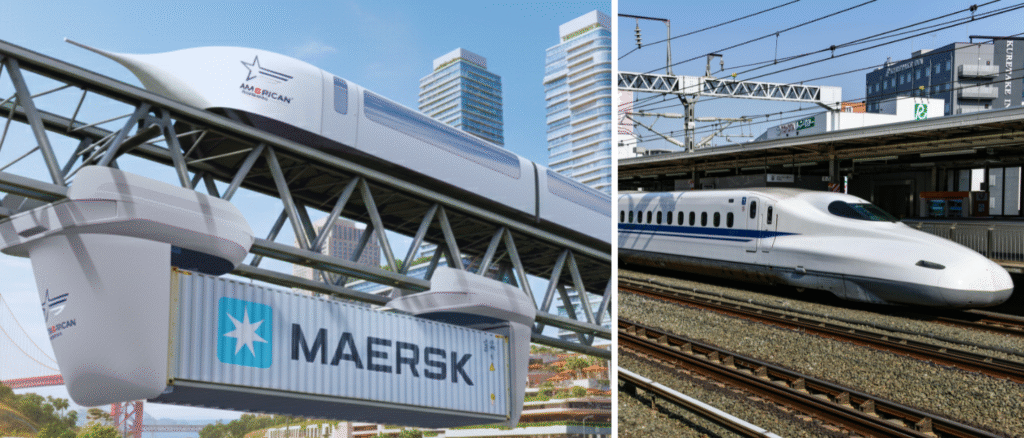
While several HSR projects dot the American landscape, they pale in comparison to ADR’s visionary scope. Plagued by cost overruns, delays, and limited functionality, these initiatives focus narrowly on passengers, ignoring freight, sustainability, and broader societal needs. ADR’s elevated dual-use system, low costs, and legacy plan integration deliver unmatched benefits—let’s examine how it towers over key competitors, drawing from the latest updates as of October 2025.
California High-Speed Rail: A Costly, Delayed Passenger-Only Venture
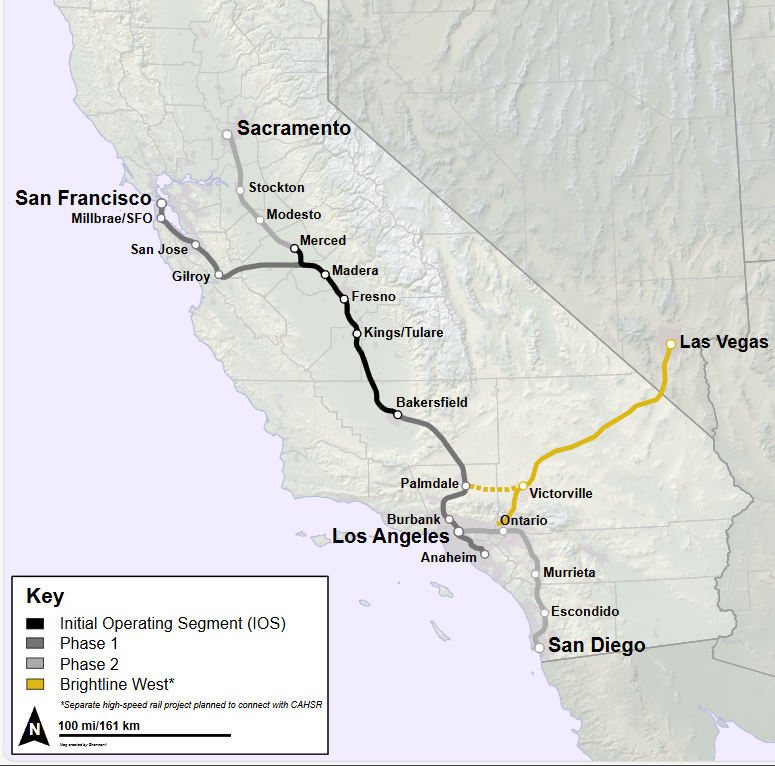
California’s HSR aims for 220 mph between San Francisco and Los Angeles, with 171 miles under construction in the Central Valley as of 2025. However, costs have exploded to $128 billion from an initial $33 billion, with operations delayed to 2030 or later, and persistent funding challenges highlighted in the 2025 Project Update Report. ADR surpasses this with lower capex ($13-42M per mile), dual freight/passenger revenues to offset costs, and elevated design avoiding land disputes and ecosystem fragmentation. While California grapples with funding shortfalls and no freight integration, ADR’s all-weather resilience and emissions cuts (124M tons annually) make it more sustainable and efficient. Moreover, ADR’s non-interfering support for heavy rail like UP alleviates port congestion without the shared-track issues that could further delay California’s project.
Brightline West: Over Budget and Isolated
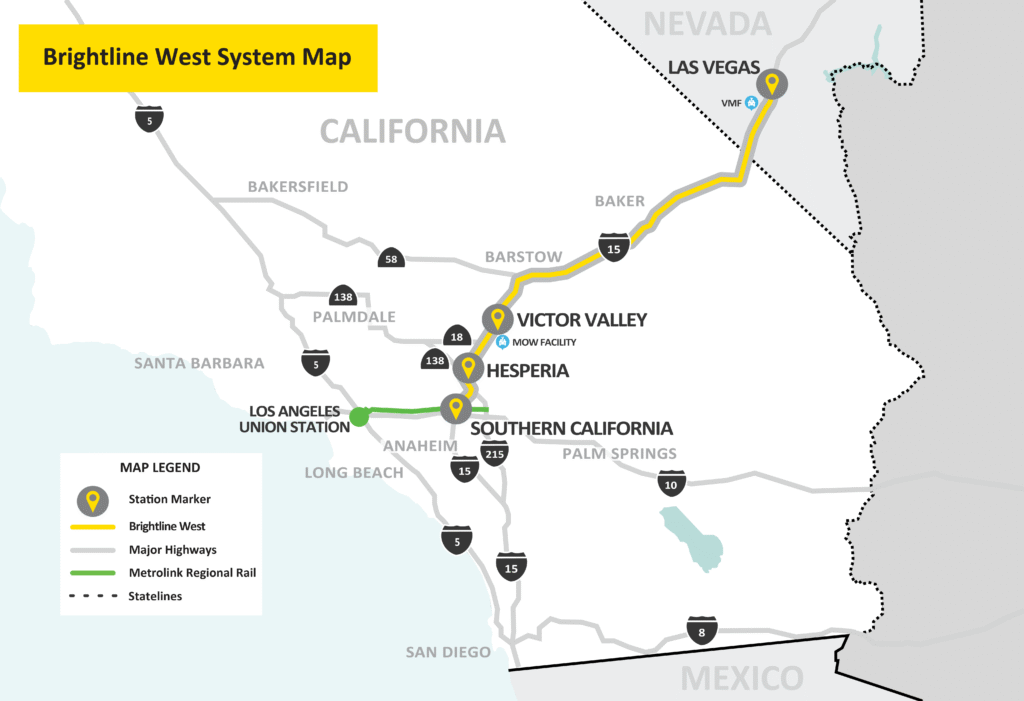
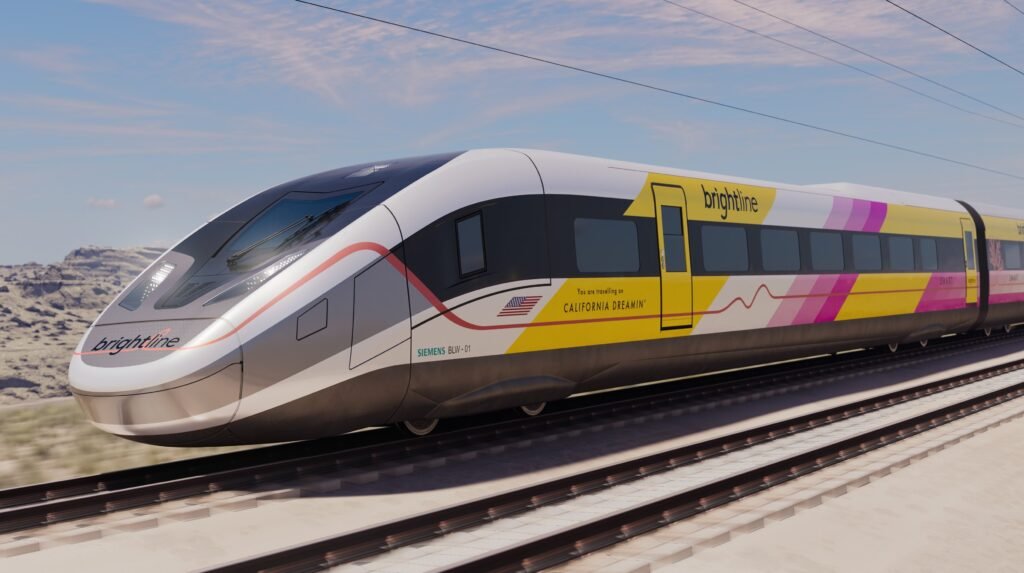
Connecting Las Vegas to Rancho Cucamonga at 200 mph, Brightline West broke ground in 2024 but faces delays to 2029 and costs surging to $21.5 billion, a 35% increase as of October 2025 ADR’s 310 mph passenger speeds and 125 mph freight capabilities, combined with breathtaking views and on-demand services, outshine this passenger-only line. ADR’s non interfering heavy rail handoffs (e.g., with UP) enhance regional logistics, unlike Brightline’s ground-level setup prone to delays. The project’s isolation ignores broader economic revival, while ADR’s Dream cities foster sustainable communities.
Brightline Florida: Grounded in Limitations
Operational from Miami to Orlando at 125 mph since 2023, with Tampa extensions planned, Brightline Florida is ground-bound and vulnerable to hurricanes. ADR’s elevation ensures all-weather ops, while dual-use tracks and trucking hybrids reduce emissions far beyond Brightline’s scope. ADR’s linear cities as distribution hubs add sustainable living options absent here, and its heavy rail synergies avoid the performance drags of shared infrastructure.
Texas High-Speed Rail: Stalled Amid Funding Woes
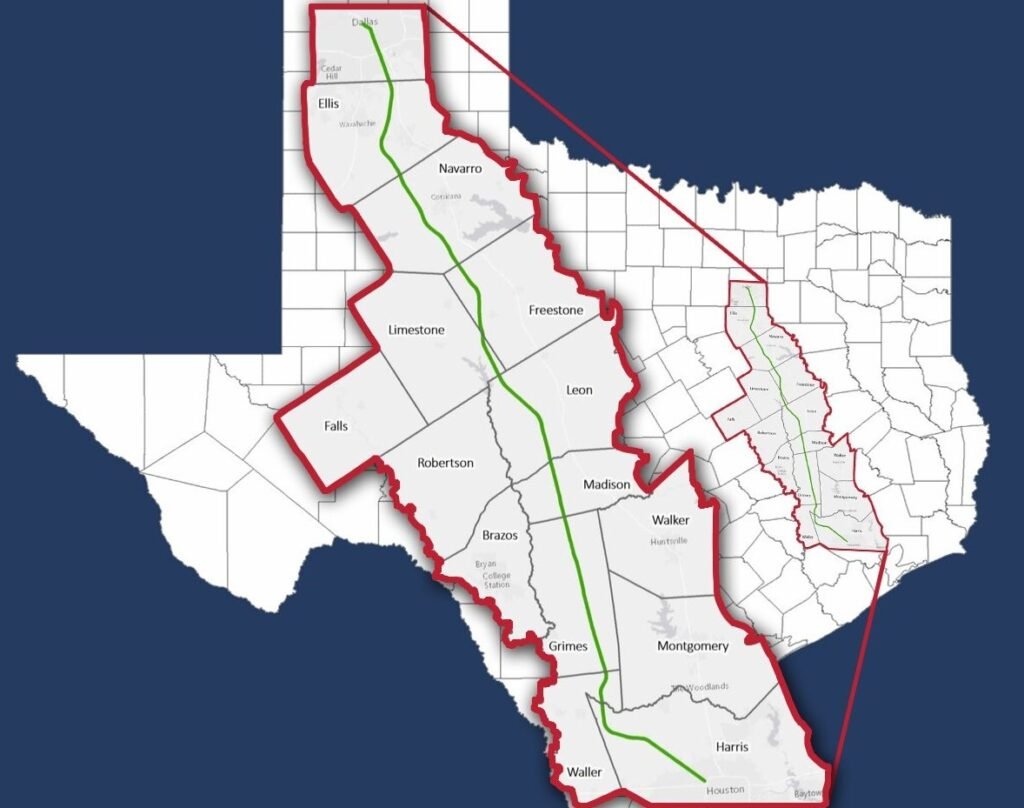
Proposed for 205 mph between Dallas and Houston, Texas Central’s costs exceed $30 billion, with grants cut and no clear timeline beyond planning as of 2025. ADR adapts to Texas’ growth (10M+ by 2050) with modular rails and freight revenues, plus heavy rail synergies without interference—fixing yard congestion at ports like Houston.
Unlike Texas Central’s passenger focus, ADR’s holistic plan tackles inequality and jobs.
Cascadia High-Speed Rail: Early-Stage and Costly
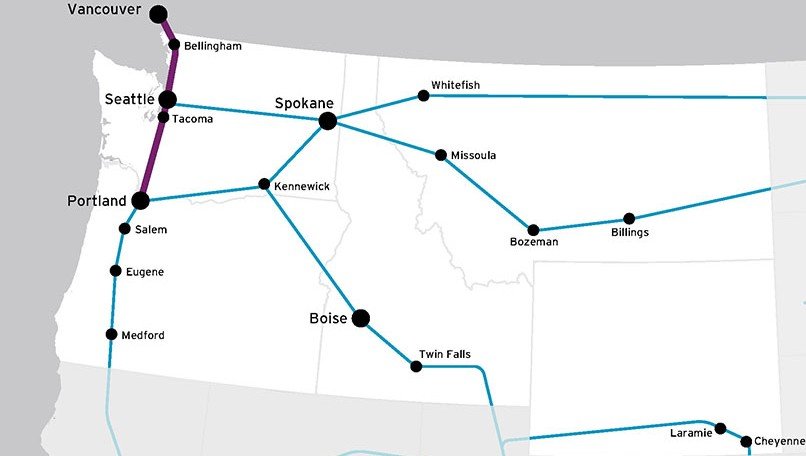
Planning for 250 mph from Vancouver to Portland, Cascadia estimates $42 billion and 15-20 years to operations by 2040-2045, with $55 million in recent grants. ADR’s certified safety (ISO/TUV) and rapid deployment outpace this, with on-demand apps and rural-urban links via Dream cities. ADR’s non-shared heavy rail support improves efficiencies without the long timelines plaguing Cascadia.
Amtrak Acela Express: Incremental Upgrades Fall Short
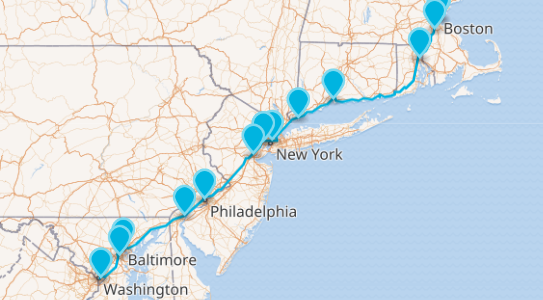
Northeast Corridor upgrades hit 160 mph on segments, with NextGen trains launched in August 2025, but average speeds are 82 mph amid $117 billion est. costs and only 72% on-time rates. ADR’s 310 mph and no shared-track delays deliver superior reliability, plus freight integration decongesting mixed lines. ADR’s broader societal impact eclipses Acela’s modest enhancements.
Gulf Coast High-Speed Rail Corridor: Nascent and Limited
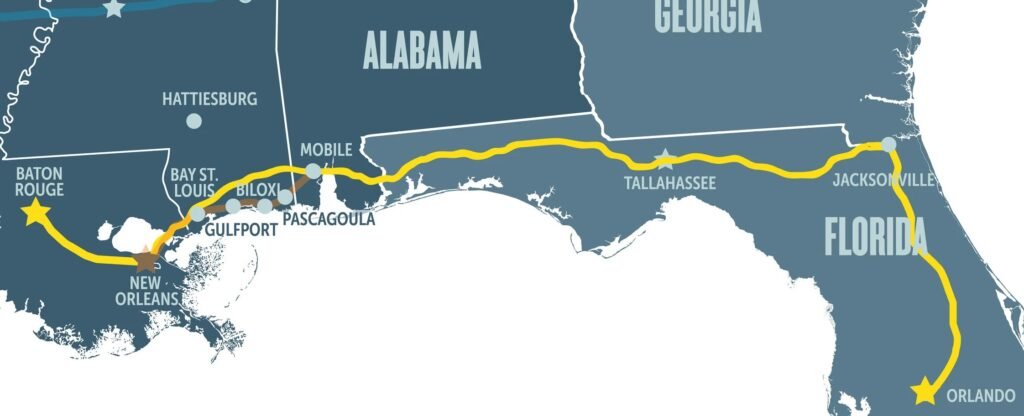
Launching spring 2025 between New Orleans and Mobile, infrastructure lags with no high speeds yet. ADR’s flood-resilient elevation and port freight focus far exceed this early effort, with automated heavy rail transfers ensuring seamless ops.
Southeast High-Speed Rail Corridor: Endless Planning
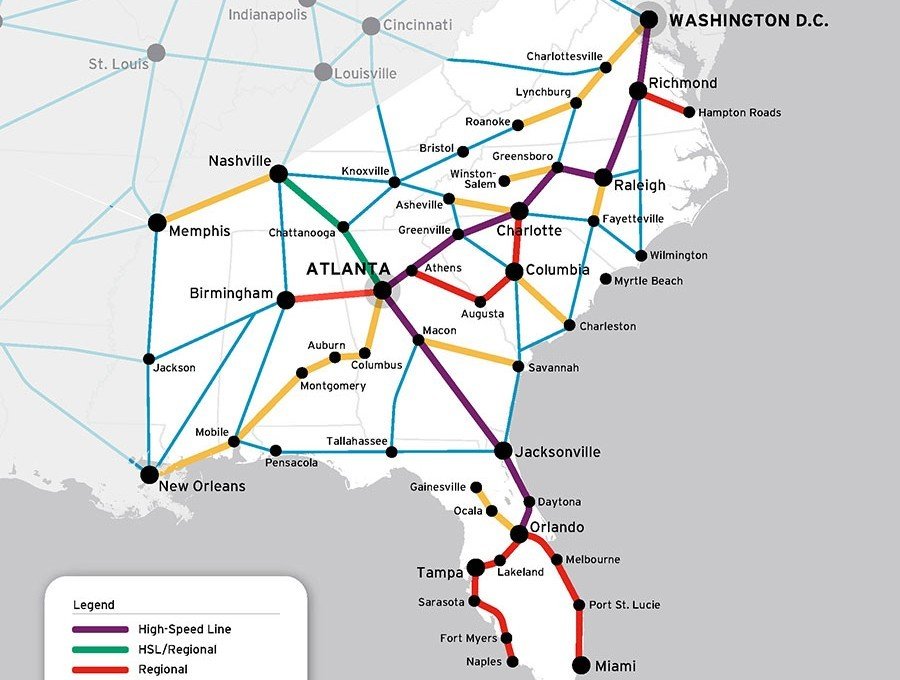
Planning efforts for this corridor have been ongoing since 1999, yet more than two decades later, there are still no firm timelines, target speeds, or unified implementation strategies. Progress has been slow and fragmented, with inconsistent standards and disconnected segments preventing cohesive development.
ADR’s rapid modular build and value appreciation via Sovereignty Fund unite the South, avoiding shared-track inefficiencies.
Chicago Hub Network: Modest Speeds in the Midwest
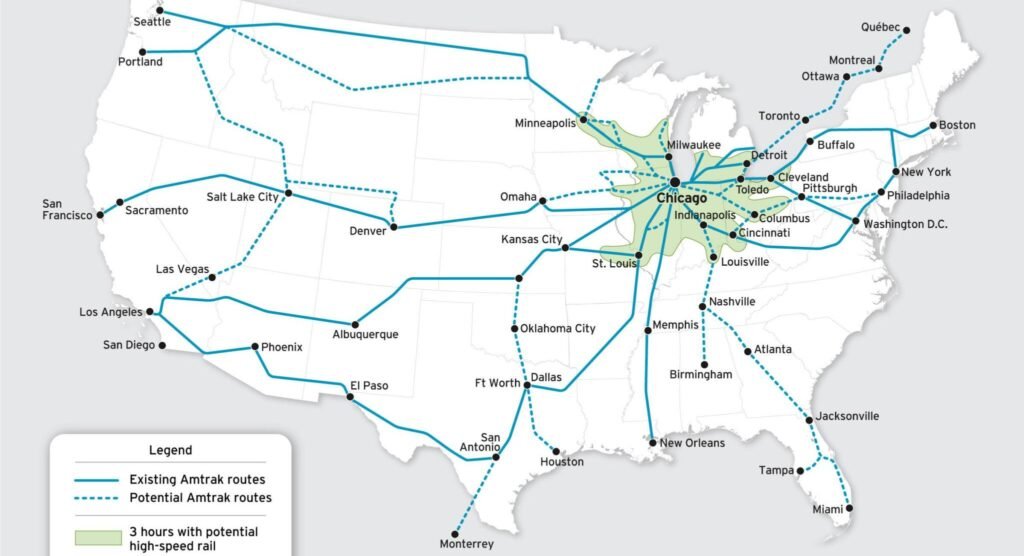
Upgrades to 110 mph ongoing, but passenger-focused with congestion issues. ADR’s dual-use and heavy rail handoffs alleviate chokepoints, boosting reindustrialization.
North Atlantic Rail: Ambitious but Unfunded
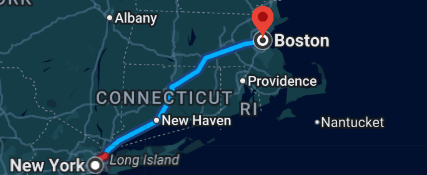
Proposed 200 mph NYC to Boston at $105 billion over 20 years. ADR’s lower costs and urban adaptability deliver faster ROI, with non-interfering heavy rail support.
Empire Corridor Upgrades: Slow Progress Upstate
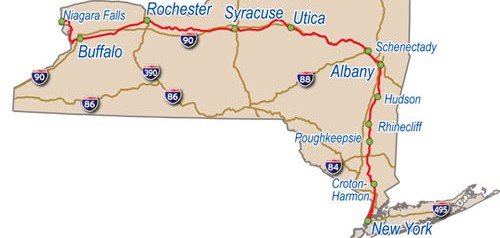
EIS since 2010, speeds up to 125 mph considered, but little advancement. ADR’s rural appeal via Dream cities revives economies without delays.
Atlanta-Charlotte Corridor: Distant Horizon
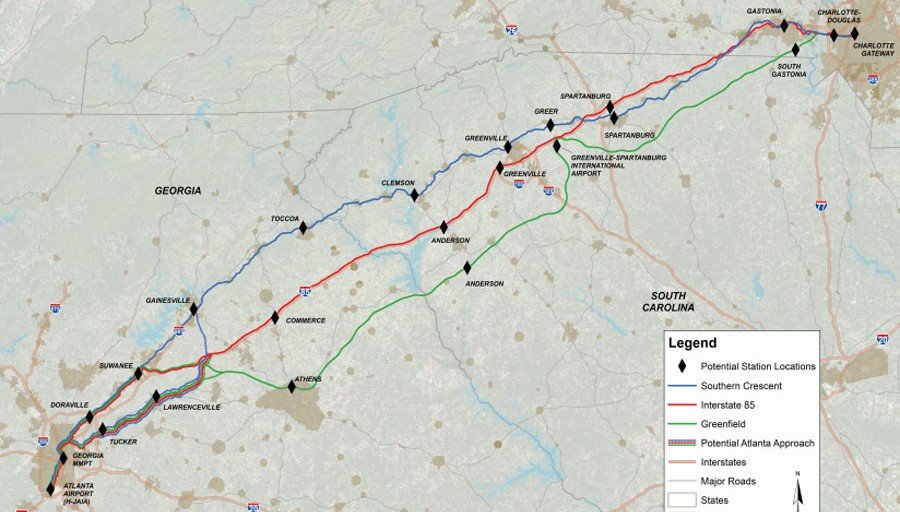
Planning for $6.2-8.4 billion, service by 2050. ADR’s e-commerce freight cuts and cronyism-tackling plan foster growth sooner, with heavy rail synergies.
ADR’s advantages, cost efficiency, dual-use, sustainability, and non-interference, make it incomparable, especially as competitors like California HSR face ongoing funding hurdles.
The Nine-Point Legacy Plan: ADR as Part of a National Transformation
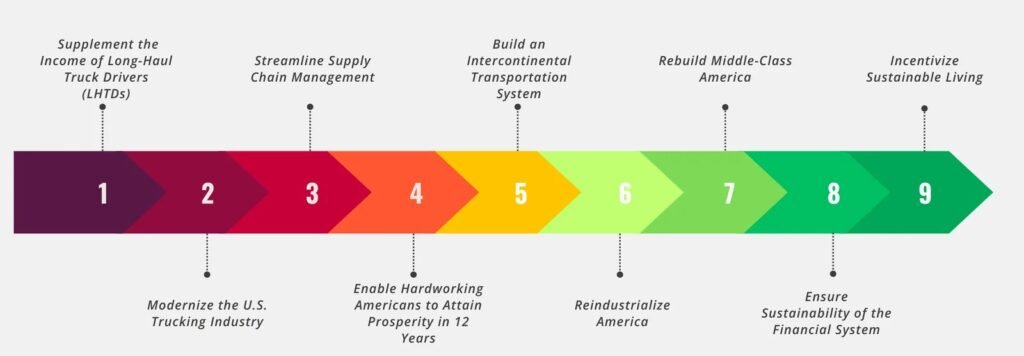
ADR is one of nine interconnected components in the Legacy Project, a blueprint to flatten America’s “mountain of problems.” This plan supplements trucker incomes to gain industry buy-in, creates Citizen Enrichment for prosperity (debt-free living in 12 years), and supports reindustrialization with jobs. The $5.5 trillion investment, funded via deficit-neutral U.S. Anniversary Dollars (125-year zero-interest loan repaid from revenues), avoids taxes or debt hikes. Linear Dream cities are critical, serving as nodes for this vision, blending transport, distribution, and sustainable communities to decentralize populations and boost connectivity.
Elaborating, the plan’s steps include pressuring industries for compliance, integrating into “America First” agendas, and creating air taxes for local buy-in. ADR’s role amplifies these: Its pilots, like Houston to the Texas Triangle, demonstrate economic growth through efficient freight, while Dream cities host job-creating hubs. This addresses automation displacement by providing pathways to new roles, ensuring workers thrive amid tech shifts, no other HSR embeds such foresight.
Economic, Social, and Environmental Benefits: Uniting America

ADR’s impact extends far: A $9.9 trillion GDP boost from infrastructure, job creation in construction and ops, and emissions reductions aligning with green goals. It revives the American Dream by enabling affordable rural living and efficient commutes, while uniting Americans through shared prosperity, countering NIMBYism, cronyism, and divisions. Socially, it flattens inequality by empowering workers; environmentally, its low-material design preserves biodiversity. Economically, dual revenues and trucking modernization stimulate growth, with pilots proving halved costs and faster supply chains.
In contrast, competitors like Brightline West offer isolated benefits, ignoring national unity. ADR’s plan tackles the automation “tsunami,” where millions face displacement, government and private solutions fall short, but ADR’s framework ensures resilience.
Join the Revolution: Your Role in Making America Great Again
The time for half-measures is over. Get informed. Schedule a Meeting to Get Involved. Help us help President Trump achieve his mission: Make America Great Again. Visit AmericanDreamRail.org to sign the petition and be part of this legacy.